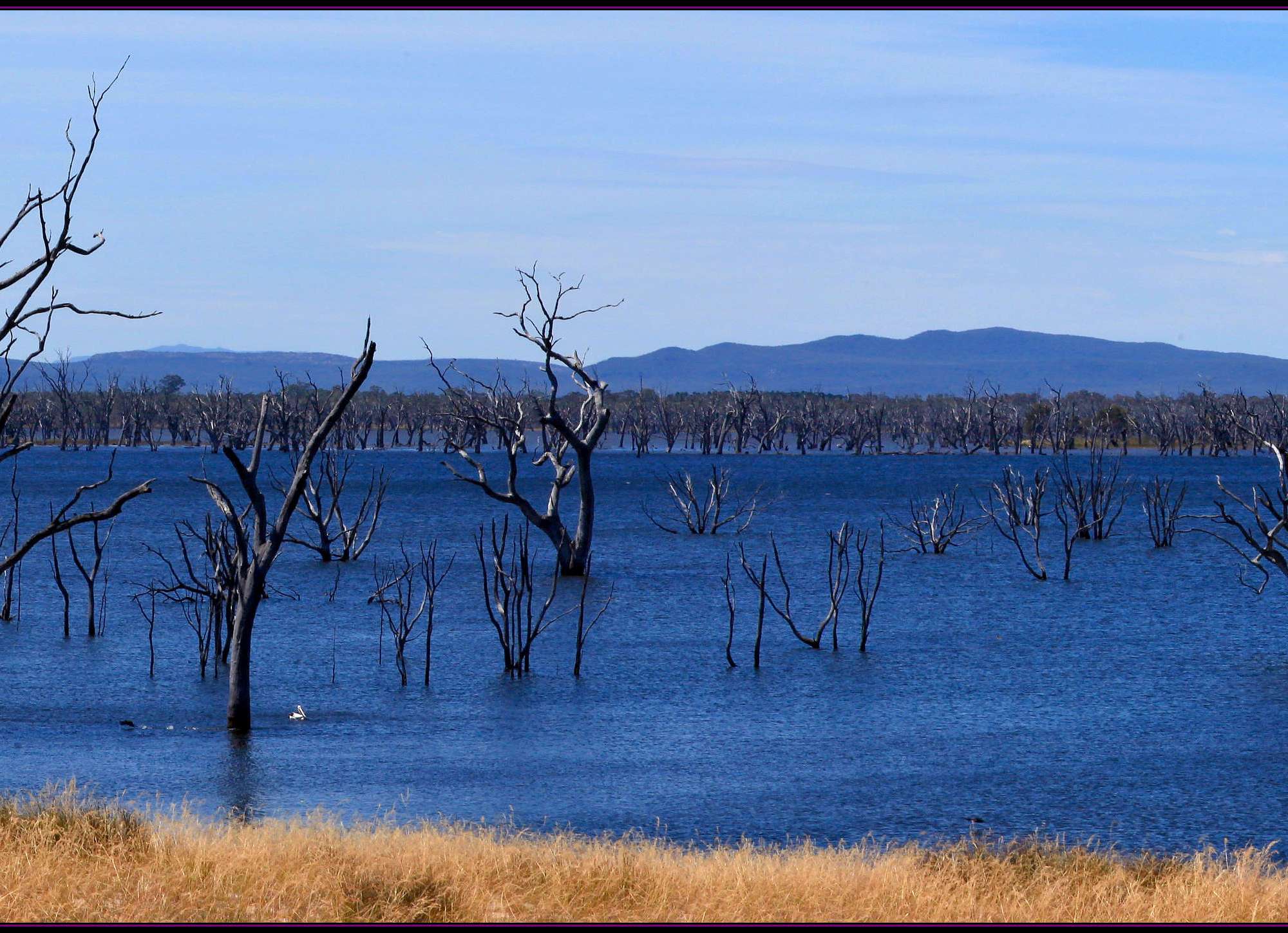
Our trip further into west Victoria has seen us treated to another facet of this state – the weather. In the two weeks we have been here we have experienced the gamut from cool temperatures including ice on the ground at Mt Hotham to torrential rain and at this particular place we endure forty degree heat and gusty winds coming from the direction of the desert. Not quite the four seasons in a day that Victoria is renowned for but certainly four seasons in two weeks.
For those of you that don’t know Stawell it has a couple of items that make it famous. First off their is a gold mine in the heart of town which is why its exists and secondly, each Easter there are a series of running races conducted here that vary in distance with the main event known as the Stawell Gift.
The race is a handicapped start, so its staggered to suit the capabilities of the different competitors to make it fairer, plus it is run over the old distance of 110 yards. It is the richest race of the Australian Athletics calendar so brings in some very strong competition. The other bonus is that the winner of each year’s event has a plaque embedded into the footpath of the main street of town to honor their victory.


The main reason for us to choose Stawell as a base is that it is positioned nicely to enjoy the Grampians, an incredibly beautiful mountain range that is prominent in the region. Its an area of colour contrasts between blue skies, golden wheat fields and green treed areas of the mountains so great for photography.
Framing the Wimmera – Photographic Trail
Our first day trip is to the town of Horsham where we follow an interesting photographic trail named the Framing of Wimmera. The concept came to fruition in 2005 when a local artist named Dr. Greg Pritchard installed a wooden picture frame outside the town of Natimuk which framed Mt Arapiles. It gave passers-by a vantage point that presented a beautiful picture. From here the local arts committee came on board and three more frames were installed at different points in the area. The photos below show the frames as they stand in their environments.


Now here are my attempts to show the beauty that is within the view of the frames.


Hopefully I have done justice to the scenes.

The Grampians
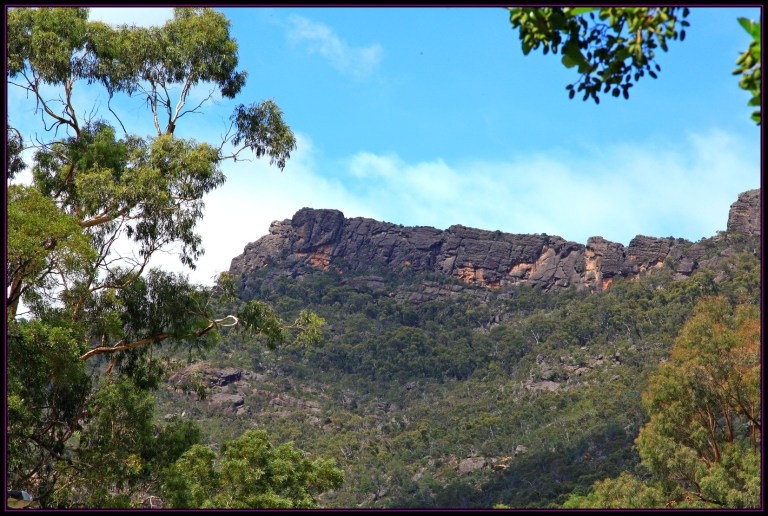
Our next trip is into the Grampians starting with Halls Gap which is a town that is nestled into the foothills of the mountain range. The town is literally the gateway to scenic lookouts, waterfalls and more hiking than you could ever wish to do. The difference with the Grampians is that it is not about lush fern filled valleys or tall timbered forests, it is about the rocky outcrops and the textures of the mountains.
From the town we head to our first destination which is Silverback Falls. As we walk the track from the car park we realise that the recent rains seem to have missed this area as the stream running alongside the track is no more than a trickle. We persevere to the end of the track and are rewarded with a small but very pretty waterfall. You can walk right up to the waterfall and easily place a hand into the cool waters dropping from above.


From the falls we head up onto the mountain range where we visit a number of absolutely stunning lookouts that offer views in every direction. We stop in and walk the trails at Wonderland, Boroka Lookout, Reids Lookout and The Balconies which deliver incredible views then add in a visit to MacKensie and Broken Falls.


This mountain range is just incredibly rich in scenery so if you are in the area and have a few days on your hands, its worthwhile taking the time to explore.
The Silos Art Trail
Our last day in the area sees us following the Silos Art Trail that heads north-west from Stawell, into the wheat belt, visiting 6 painted silos over 245Km in distance. The silos were decommissioned at various times and sit on rail sidings in small towns. They are a reminder of the boom period where farmers transported their grain to the silos before it was transferred to various mills.


This art is on a grand scale as each of the silos typically stands well over ten metres in height. The detail in the paintings is exceptional and the stories surrounding the effort required to create the art are interesting. The silo at Brim, for example, was painted in December and January with the heat and dust creating less than ideal conditions for the artist. He eventually had to paint in the mornings then take a break and recommence in the late afternoon as the paint was literally drying on the brush. All this while in a cherry-picker high above the ground with the winds moving you around. Great challenge, even better result.
We are now heading back down to the coastline between Melbourne and Geelong for a few days before heading to the farm in Terang.
 Stoneworx Photography